Finding your edge
Borders are where the life is

This is the second of a series of reflections that return to the themes of my book In the Fullness of Time. In the first one which you can read here I returned to the genesis of the book, the closure of the church building in the village in which I grew up. It was this event that generated a growing curiosity in me. I have spent many years exploring the potential for new and imaginative ways of being the church in our secular age. But my only direct experience of this has been in an urban context. It wasn’t right for me speculate on how what I, and others, have learnt from this might apply to rural contexts. I needed to listen to rural church leaders and see what they had to say. So I went on a mini-tour of rural church leaders, ‘friends and acquaintances’ who I knew enough to trust they would be offering some creative responses toward the present challenges.
In the heart of Dorset Lewis Pearson is the vicar of a cluster of 6 small village churches. I should say that it was Lewis that gave me the phrase ‘buildings have a ministry’ that I quoted in the previous post. Talking to Lewis brought home just how powerful these buildings are in our ‘ecclesial imaginary’. They weigh so heavily in our collective vision and structure our practice to insistently. They exert a kind gravity on our communal vision which requires a huge amount of energy to break free from.
I think it was Andrew Rumsey who referred (in his book Parish) to two ways in which the hidden rules of a community and culture are disrupted - one is festival, the other crisis. The Covid crisis was a period where every church in the country was forced to consider how it might be possible to be the church without a building. Of course the standard response was to quickly and effectively employ technology to reproduce the in-building experience. But for some, particular as restrictions relaxed a little, more imaginative responses emerged.
One church in Lewis’ group of parishes began to use the churchyard space creatively, holding services in that space, developing liturgy around the times and seasons, creating displays on the boundary about Christian festivals as they happened. You could say that this is as equally reiterative as the dash to Zoom-church was, just moving worship to an outside space. Yet what it did was to create something that online church struggles to (probably fails to) achieve and that is the development of a liminal space.
So often in my mini-tour of rural churches and their leaders I heard the story of how the building had sucked in all the energy and resource into administration and maintenance leaving scarce resources for community engagement. It leaves such churches without the kind of social connections that make the physical journey between the street and the door possible for the uninitiated. So many of our church communities have these hard psycho-social boundaries that run around their physical space leaving a kind of black box of mystery behind their walls.
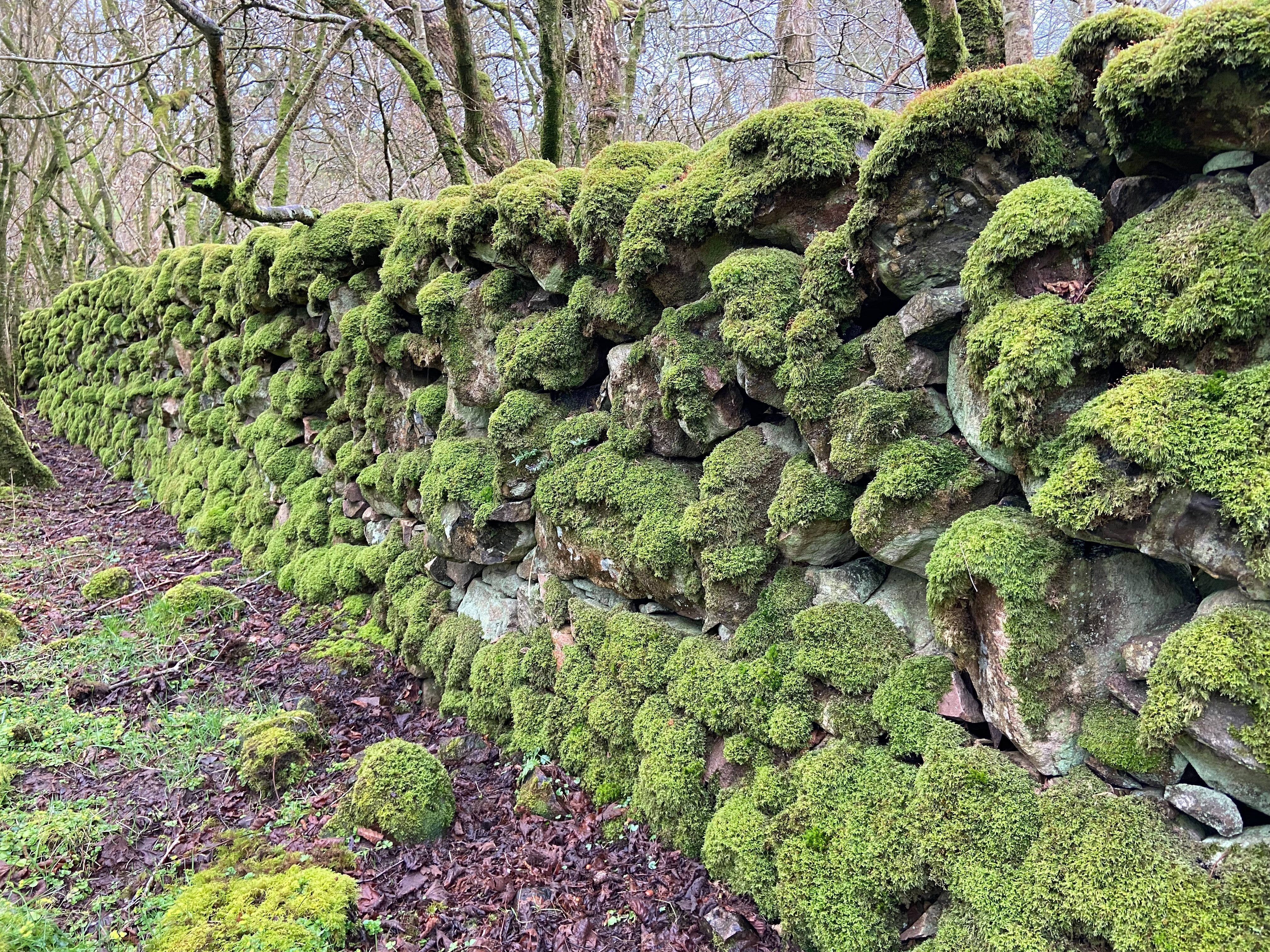
In ecological terms however it is precisely in the liminal spaces, in the margins and edges where habitats come in contact with one another that creative and interesting things happen. Its why for example that mushroom foragers skirts the edges of woodland, and even the edges of car parks. That’s so often where mushrooms emerge as mycelia venture into a new environments and their food sources diminish. Edges create mini-crises, or mini-creation events. Liminal zones, places of marginality, are spaces where dialogue takes place, where things that might not otherwise meet can do so, where the innovative results of unlikely conversation emerge.
In the retreat into the hidden spaces of our very visible buildings the church in many places has lost these kind of spaces. It has lost spaces of mutual dialogue where it possible for people to meet on their own terms, not as guest and host (with the power dynamic inherent to that) but as persons, subject to subject. (Another great concern of mine is the degree to which the church struggles to relinquish its tendency to play host, and worse sees people ‘in the world’ as resources for its sustainability - but that’s maybe for another time).
A crisis like Covid - which put the whole agenda of church growth to one side for a time - enabled this very small rural church to engage creatively with its community and to shape a different kind of space. Boundaries were blurred to some extent, enough it seems for new connections and relationships to be explored. In another parish instead of extending the consecrated space of a graveyard it was decided to plant and apple orchard and host a community cider press. Borders are where the life is. Buildings have a ministry, sure, but as much in the ‘surface’ and ‘edge’ they offer for local communal life, as in what takes place beyond the door. We give the majority of our attention to what happens one hour a week in our buildings. We should give as much attention to the edges. That’s where life emerges.
https://canterburypress.hymnsam.co.uk/books/9781786226075/in-the-fullness-of-time